📚Vocabulary Masterlist
Vocabulary Exercise 1 — Choose the correct translation
Select the right Russian equivalent for each English word.
Vocabulary Exercise 2 — Fill in the gaps
Complete the sentences with the correct vocabulary word.
Vocabulary Exercise 3 — Translate
Translate the sentences into English using the target vocabulary.
❄️Block 1 — Cold Places
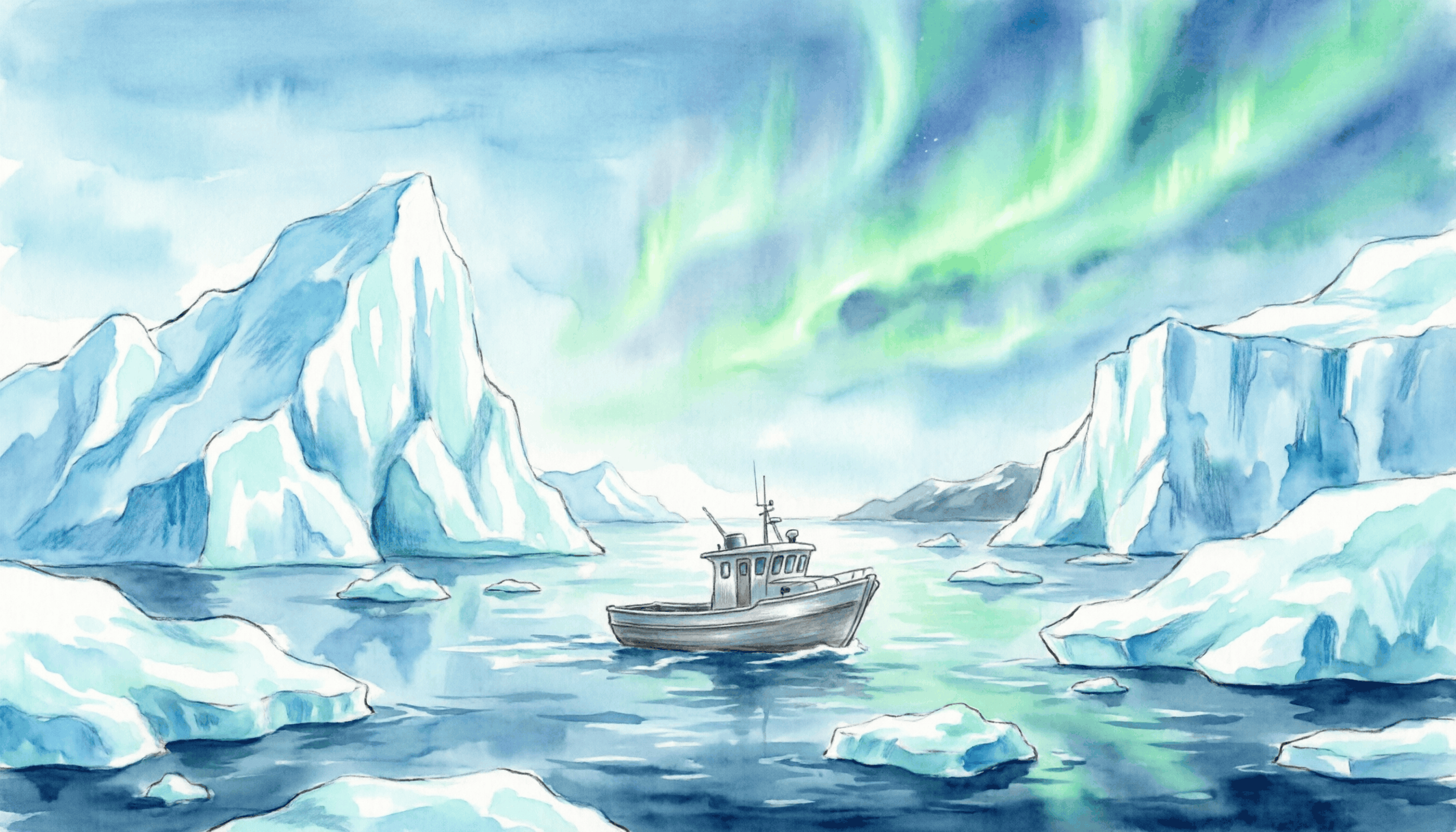
glacier · icebergs · cold blue sea · silver light · a small boat
• Antarctica is the coldest place on Earth — about −60 °C in winter.
• The Arctic and Antarctica are not the same: polar bears live in the Arctic, penguins — in Antarctica.
• A glacier is a very big river of ice. It moves very slowly — about 1 metre a day.
• Murmansk is the biggest city above the Arctic Circle. In winter there is no sun for 40 days.
• Kamchatka has more than 300 volcanoes. About 30 of them are active.
• You can see the northern lights (aurora) in the north from September to April.
Vocabulary · Snow, ice and the North
Click any word to hear it. Then listen and repeat.
Vocabulary · Warm clothes
Click a word to hear it. What do you wear in winter?
Grammar · Present Simple
• Affirmative: I love the North. She lives in Murmansk.
• Negative: I don't like heat. He doesn't travel in summer.
• Question: Do you know Antarctica? Does she like snow?
Markers: usually, often, sometimes, always, never, every day / week / year.
Exercise 1.1 — Present Simple
Complete with the correct Present Simple form of the verb in brackets.
Exercise 1.2 — Complete the sentences
Write the correct form of the verb in brackets.
Exercise 1.3 — Translate
Translate into English.
Challenge · My cold place
Write 5 sentences about a cold place you know or want to visit. Use the Present Simple.
Speaking · Cold places talk
Click the speaker to hear the question. Then answer out loud.
🐧Block 2 — Antarctica
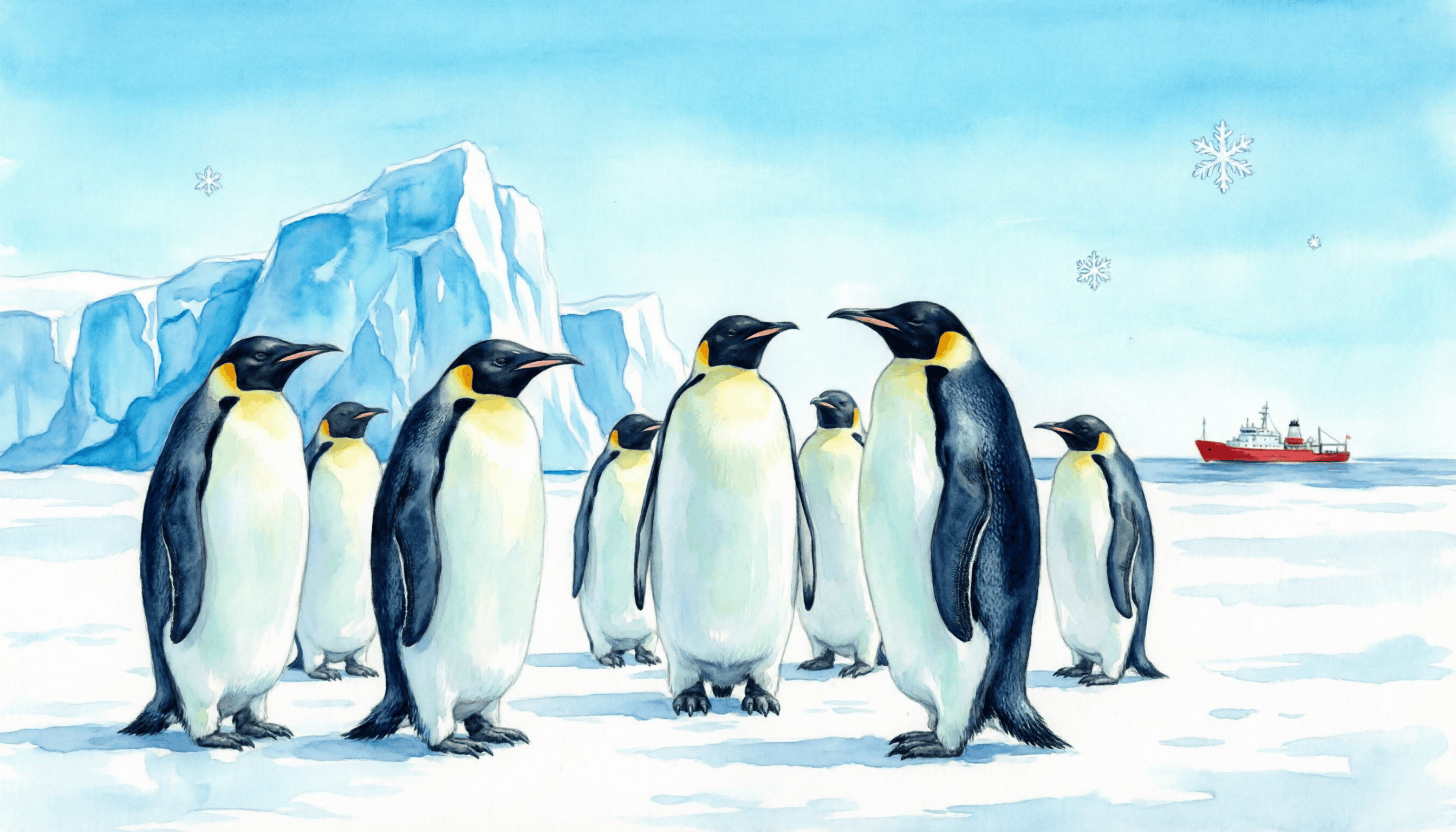
penguins on ice · big icebergs · cold blue sky · a red research ship far away
• Antarctica is the coldest, driest and windiest continent.
• Nobody lives there permanently — only scientists at research stations.
• Emperor penguins can be 1.2 metres tall and weigh 40 kg.
• There are no trees in Antarctica — only ice, snow and rocks.
• In summer the sun does not set for months.
• Around 4,000 scientists from many countries work there in summer.
Vocabulary · Expedition & science
Click each word to hear it. Then repeat out loud.
Grammar · Present Continuous
• Affirmative: Look! The penguins are swimming.
• Negative: I am not sleeping now.
• Question: What are you doing?
Markers: now, right now, at the moment, Look!, Listen!
Spelling: swim → swimming · take → taking · write → writing · study → studying
Exercise 2.1 — Present Continuous
Complete with the correct Present Continuous form.
Exercise 2.2 — Present Simple or Present Continuous?
Read the sentence and choose the correct tense.
Exercise 2.3 — Translate
Translate into English. Mind the tense!
Challenge · Picture description
Look at the picture. Write 6 sentences about what is happening now. Use the Present Continuous.
Speaking · Antarctica talk
Click the speaker to hear the question. Then answer out loud.
🌋Block 3 — Kamchatka
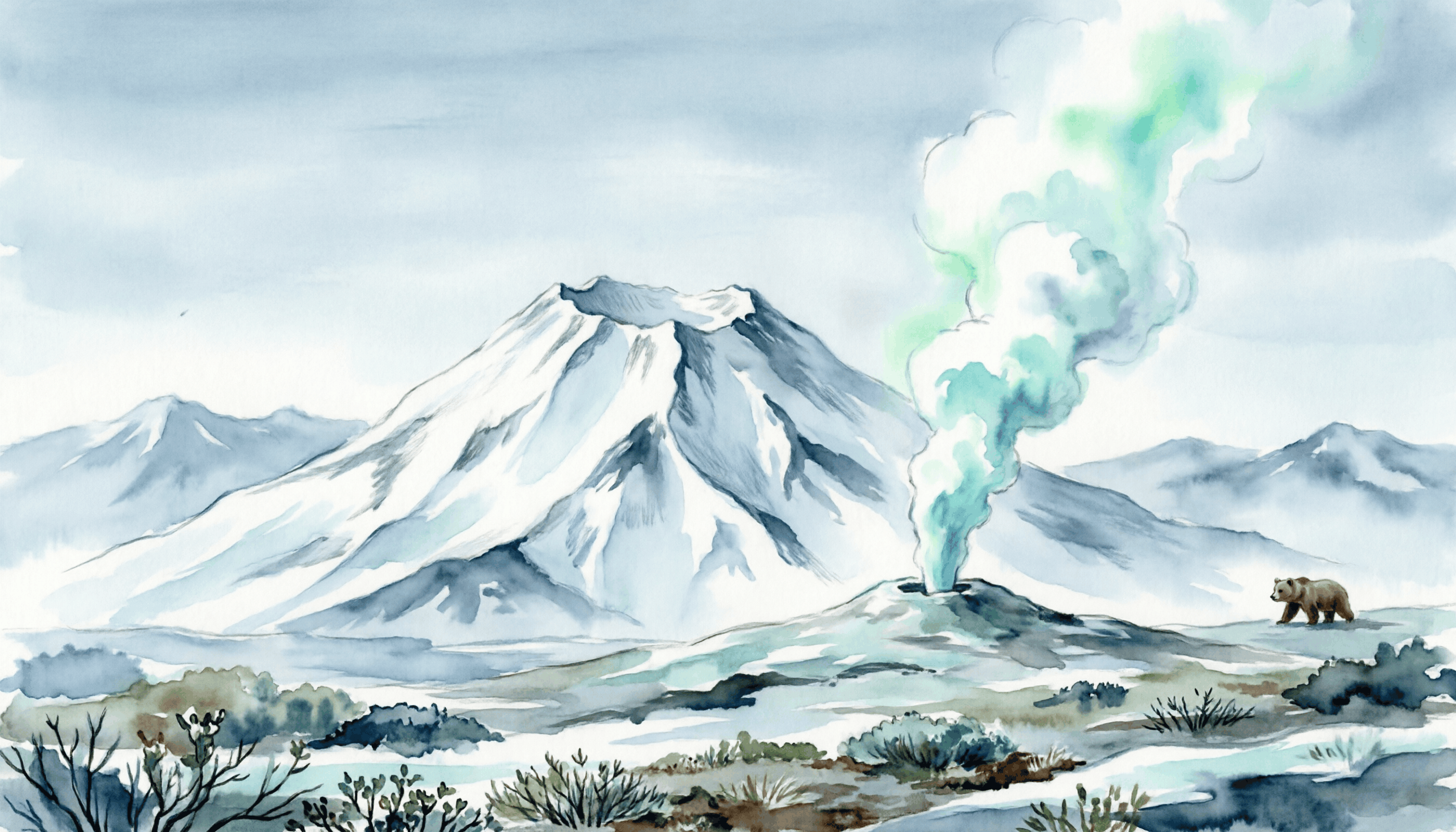
snow volcano · steam geyser · tundra · a brown bear · misty mountains
• Kamchatka is a big peninsula in the far east of Russia.
• It has more than 300 volcanoes — about 30 are active.
• The Valley of Geysers is one of the most beautiful places in the world.
• Around 20,000 brown bears live in Kamchatka.
• You can only get there by plane or by ship — there are no roads to the mainland.
• There are many hot springs — you can swim in warm water in the snow.
Vocabulary · Volcanoes & wildlife
Click each word to hear it. Repeat out loud.
Grammar · Past Simple
Irregular verbs: go → went · see → saw · take → took · be → was / were · have → had · fly → flew · sleep → slept · drink → drank · eat → ate
• Affirmative: We visited Kamchatka last year.
• Negative: We didn't see a bear.
• Question: Did you like the geysers?
Markers: yesterday, last week / month / year, in 2020, two days ago.
Exercise 3.1 — Past Simple
Complete with the correct Past Simple form.
Exercise 3.2 — Regular or irregular?
Write the Past Simple form of each verb.
Exercise 3.3 — Translate
Translate into English.
Challenge · My last trip
Write 6 sentences about your last trip (or a trip you remember). Use the Past Simple.
Speaking · Kamchatka talk
Click the speaker to hear the question. Then answer out loud.
🌌Block 4 — Murmansk & the Northern Lights
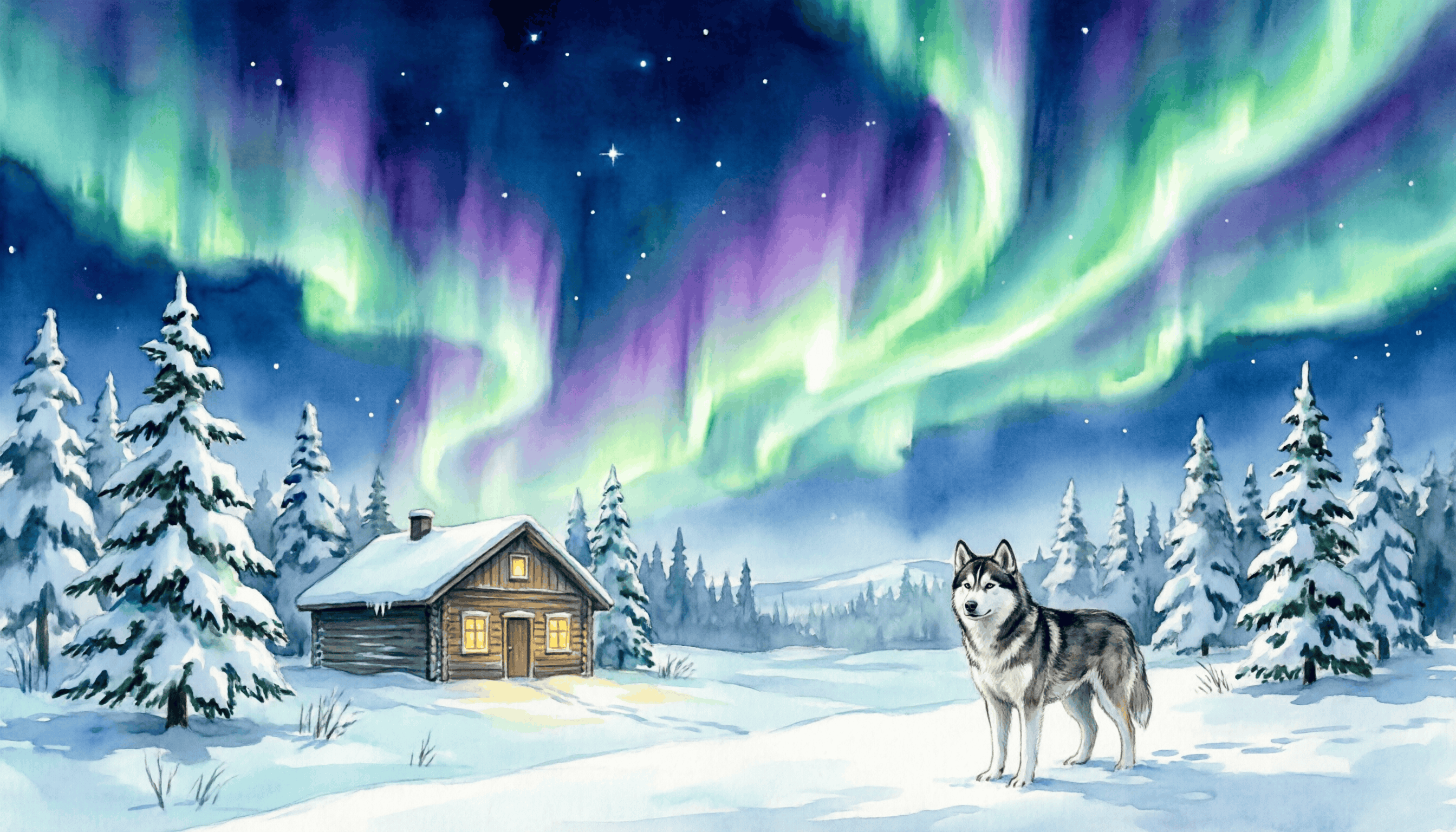
green and purple aurora · snowy forest · a wooden house · a husky · stars
• Murmansk is the biggest city in the world above the Arctic Circle — about 270,000 people.
• In winter there is a "polar night" — 40 days without the sun.
• In summer there is a "polar day" — the sun does not set for about 60 days.
• The northern lights (aurora borealis) are green, pink and purple lights in the sky.
• You can see the aurora from September to April, when the sky is dark and clear.
• Murmansk is a good place to see the aurora — tourists come from many countries.
Vocabulary · Aurora & winter fun
Click each word to hear it. Repeat out loud.
Grammar · be going to
• Affirmative: I am going to visit Murmansk next winter.
• Negative: She isn't going to travel by car.
• Question: Are you going to see the aurora?
Markers: next week / month / year, tomorrow, in summer, soon, this weekend.
Exercise 4.1 — be going to
Complete with the correct form of be going to + the verb in brackets.
Exercise 4.2 — Four tenses together
Choose the correct form: Present Simple, Present Continuous, Past Simple or be going to.
Exercise 4.3 — Translate
Translate into English.
Challenge · My next trip
Write 6 sentences about your next trip or plans for this year. Use be going to.
Speaking · Aurora talk
Click the speaker to hear the question. Then answer out loud.
📖Block 5 — Reading · A Winter Trip to Murmansk
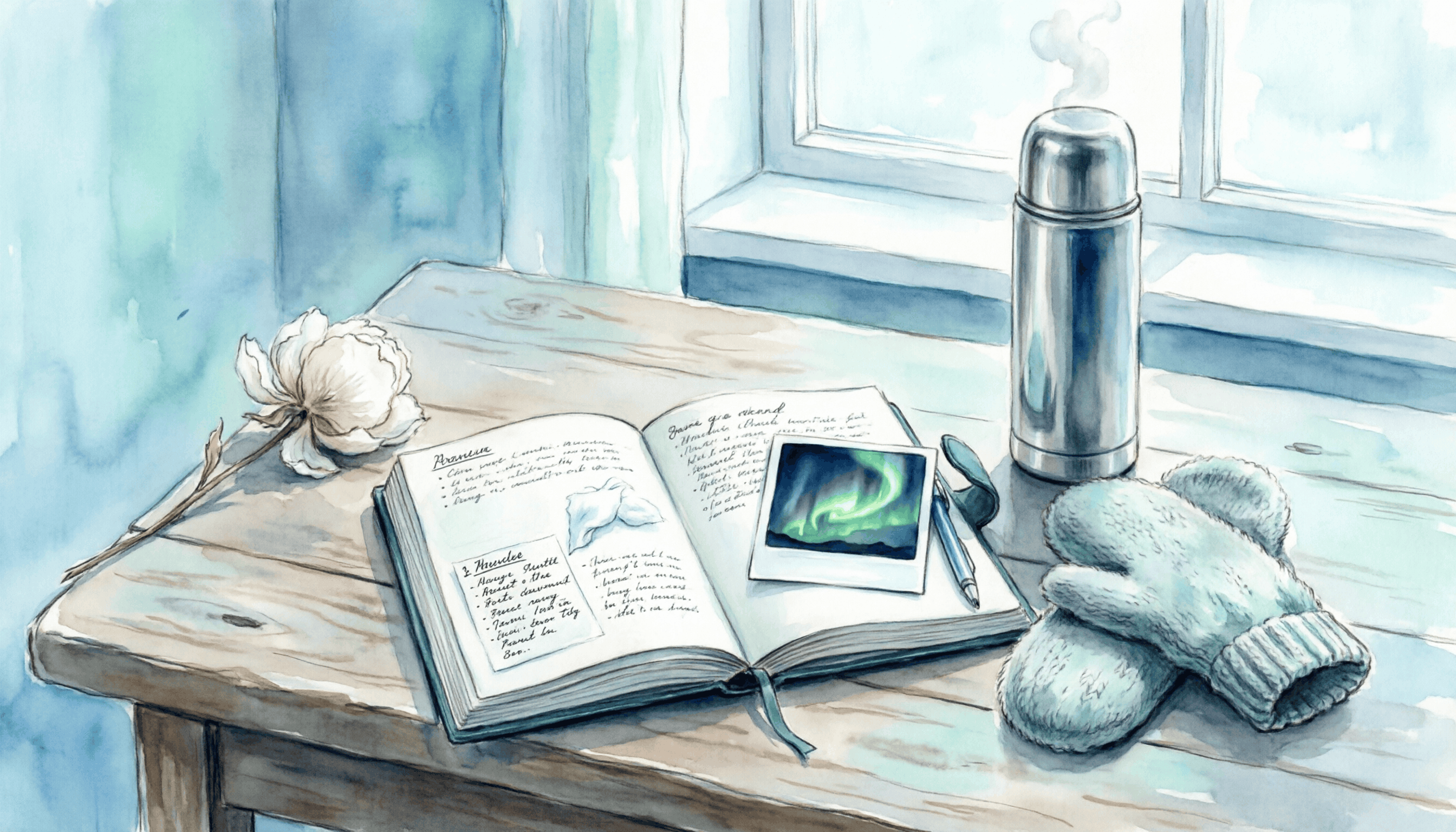
open notebook · polaroid photo of the aurora · a thermos · woollen mittens · dried flowers
Read · Vera's story
We flew to Murmansk from Moscow. The flight was two and a half hours. When we arrived, it was −25 °C. Very cold! We put on warm coats, hats and gloves.
We stayed in a small hotel near the centre. Every morning we drank hot tea and ate porridge. In the afternoon we walked in the city and took photos. In the evening we went outside the city to see the aurora.
On the third night, we saw the northern lights! They were green and purple. It was amazing. I took hundreds of photos.
We also went on a husky safari. The dogs were very friendly. We rode a snowmobile and drank tea from a thermos. It was a wonderful trip.
Now I am back in Moscow, but I am planning my next trip. I am going to visit Kamchatka next summer. I want to see volcanoes and geysers. Cold places are my passion. They are quiet, beautiful and free.
Exercise 5.1 — Answer the questions
Answer in short form, e.g. With Anna or In a small hotel.
Exercise 5.2 — True or False?
Exercise 5.3 — Find in the text
Speaking · Story time
Click the speaker to hear the question. Then answer out loud.
📝Block 6 — Grammar Masterclass
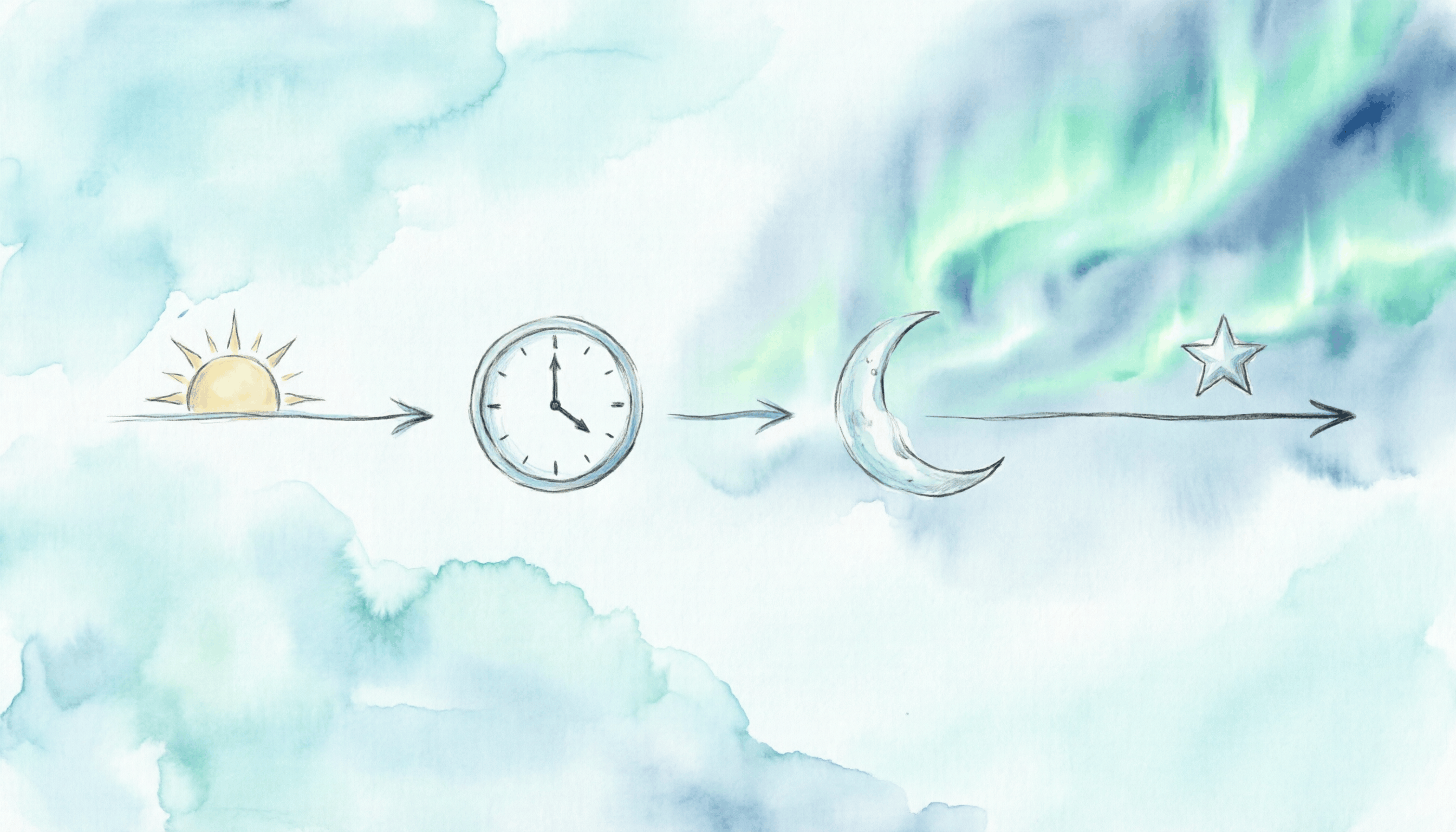
four structures at a glance · arrows on a timeline
• Present Simple — always, every day, usually → I live in Moscow.
• Present Continuous — now, at the moment → I am drinking tea now.
• Past Simple — yesterday, last year → I visited Murmansk last winter.
• be going to — plans, next week → I am going to visit Kamchatka.
Exercise 6.1 — Four tenses · complete
Complete with the correct form. Look at the marker in each sentence.
Exercise 6.2 — Choose the correct form
Choose the correct variant.
Exercise 6.3 — Make questions
Write the question for each answer.
Speaking · Grammar in real life
Click the speaker to hear the prompt. Then answer out loud.
✍️Block 7 — Writing, Speaking & Debate
notebook · cup of hot tea · a small photo of the aurora · cosy scarf on the chair
Sample essay · Why I love cold places
Firstly, cold places are beautiful. In winter, the trees are white, the sky is silver, and the northern lights are green and purple.
Secondly, cold places are quiet. There are not many people. You can walk for hours and hear only the snow under your boots.
Finally, cold places are exciting. You can ride a snowmobile, meet huskies, and drink hot tea from a thermos.
In conclusion, cold places are my favourite. They are quiet, beautiful and free. Every winter I am going to visit a new cold place — and I am going to love it.
Exercise 7.1 — Essay plan
Brainstorm your essay. Answer each prompt in a few words — you'll use them in the full essay below.
Exercise 7.2 — Write your essay
Write your full essay: 100–150 words about your favourite cold place. Use the sample above as a model. Try to use all four tenses.
Exercise 7.3 — Informal email to a friend
Write an informal email to a friend about your trip to a cold place.
Debate club · 4 topics
2. Everyone should see the northern lights at least once.
3. Cold places are more beautiful than hot beaches.
4. It is better to travel alone.
Choose one topic and write your position. Use 4–5 sentences.
Challenge · 60-second speech
Write notes for a 60-second speech, then press Start and speak for 60 seconds without stopping.
🎓Block 8 — Final Test
• 20 minutes of full focus is better than 1 hour with your phone.
• Read the sentence to the end first — then write.
• If you are not sure — think about the marker: now → Present Continuous, yesterday → Past Simple.
• Sleep after learning helps your memory a lot.
• Writing by hand helps you remember better.
Exercise 8.1 — Multiple choice
Exercise 8.2 — Fill in
Complete each sentence.
Exercise 8.3 — Fix the mistake
Rewrite each sentence correctly.
Exercise 8.4 — Translate
Translate into English.
Grand final challenge
Write 100–150 words on "The cold place I am going to visit one day". Use all four tenses at least once.
🏆Bravo!
Answer Keys · A1–A2 Workbook (for the teacher)
- 1.1: 1 loves · 2 travel · 3 doesn't like · 4 Do / know · 5 goes · 6 don't see · 7 Does / want · 8 live · 9 studies · 10 is
- 1.2: 1 read · 2 doesn't travel · 3 Do / live · 4 doesn't work · 5 writes · 6 is · 7 don't like · 8 Does / like · 9 plays · 10 study
- 1.3: 1 I love cold places. · 2 She lives in Murmansk. · 3 Do you know about Antarctica? · 4 He doesn't like heat. · 5 We travel every summer. · 6 Penguins live in Antarctica.
- 2.1: 1 are swimming · 2 is taking · 3 are travelling · 4 am not sleeping / am watching · 5 Are / working · 6 is moving · 7 isn't listening · 8 are / doing
- 2.2: 1 goes · 2 is snowing · 3 drink · 4 am drinking · 5 don't work · 6 aren't working · 7 am writing · 8 write · 9 is raining · 10 rains
- 2.3: 1 It is snowing now. · 2 She is taking photos. · 3 We are sailing on a ship. · 4 I am not sleeping. · 5 What are you doing? · 6 Look! The penguins are swimming.
- 3.1: 1 visited · 2 saw · 3 flew · 4 didn't swim · 5 Did / go · 6 were · 7 took · 8 didn't like
- 3.2: 1 visited · 2 went · 3 saw · 4 took · 5 liked · 6 flew · 7 was · 8 had · 9 drank · 10 ate
- 3.3: 1 Last year we were in Kamchatka. · 2 She saw a bear. · 3 We didn't sleep. · 4 Did you go to the geysers? · 5 I took many photos. · 6 The weather was cold.
- 4.1: 1 am going to go · 2 is going to see · 3 are going to stay · 4 aren't going to travel · 5 Are / going to buy · 6 is going to take · 7 am not going to sleep · 8 is / going to do
- 4.2: 1 drink · 2 am drinking · 3 drank · 4 am going to drink · 5 went · 6 am going to visit · 7 is sleeping · 8 sees · 9 aren't going to stay · 10 don't like
- 4.3: 1 I am going to go to Murmansk. · 2 She is going to see the northern lights. · 3 We aren't going to go by car. · 4 What are you going to do? · 5 He is going to buy a warm coat. · 6 They are going to stay for a week.
- 5.1: 1 With her friend Anna. · 2 From Moscow. · 3 Two and a half hours. · 4 −25 °C. · 5 Green and purple. · 6 A husky safari. · 7 Kamchatka. · 8 Volcanoes and geysers.
- 5.2: 1 F · 2 T · 3 F · 4 T · 5 T · 6 T · 7 F · 8 T
- 6.1: 1 am going to visit · 2 saw · 3 is snowing · 4 drink · 5 went · 6 is · 7 am writing · 8 are going to travel · 9 doesn't like · 10 took
- 6.2: 1 goes · 2 is snowing · 3 visited · 4 am going to visit · 5 is writing · 6 travel · 7 are going to go · 8 was
- 6.3: 1 Where do you live? · 2 What are you doing now? · 3 Where did you go last year? · 4 What are you going to do next summer? · 5 Does she like snow? · 6 Did you see the aurora?
- 8.1: 1 lives · 2 is snowing · 3 went · 4 am going to visit · 5 Do / like · 6 is drinking · 7 didn't see · 8 are going to travel
- 8.2: 1 lives · 2 went · 3 is reading · 4 am going to visit · 5 doesn't like · 6 saw · 7 are you going to do · 8 drank
- 8.3: 1 She live in Murmansk → She lives in Murmansk. · 2 I am go to Kamchatka → I am going to go to Kamchatka. · 3 He don't like snow → He doesn't like snow. · 4 We visit Murmansk last year → We visited Murmansk last year. · 5 What you are doing? → What are you doing? · 6 Look! It snow → Look! It is snowing.
- 8.4: 1 I love cold places. · 2 She lives in Murmansk. · 3 Last winter we went to Kamchatka. · 4 Now I am drinking hot tea. · 5 Next summer I am going to visit the North. · 6 Do you like snow?